
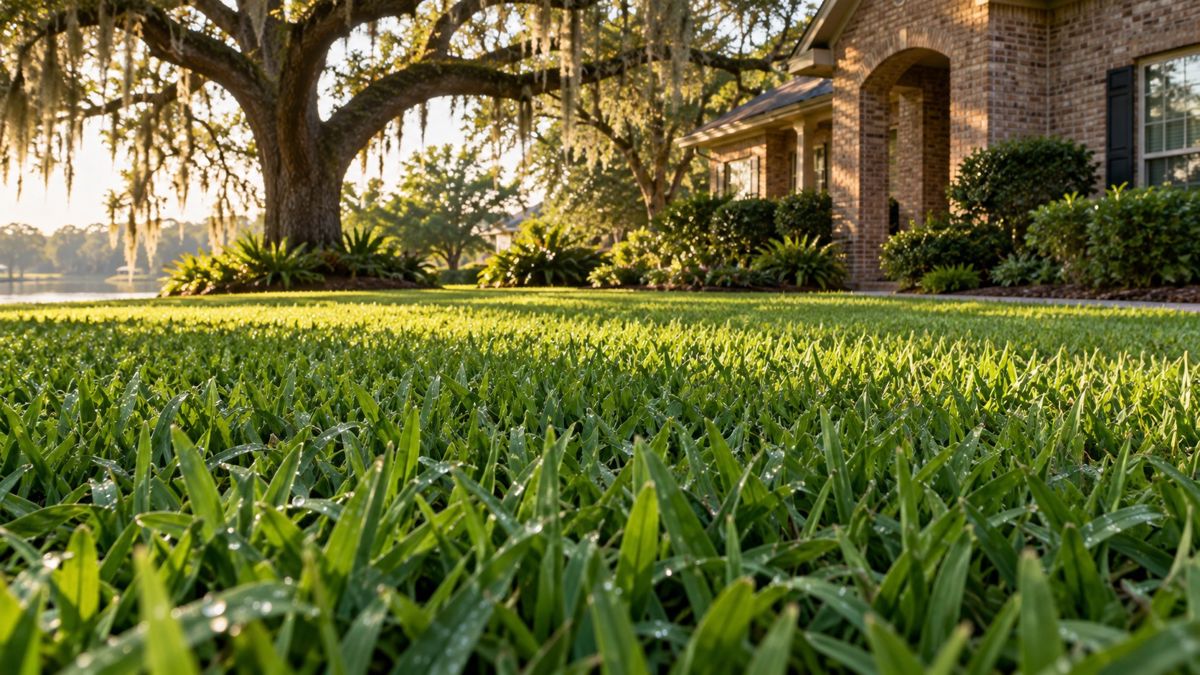
For most Lake Charles yards, St. Augustine sod is the safest choice. It handles humid heat, grows well in part shade and forms a thick, soft lawn. Bermuda is better for full sun and hard use, centipede suits owners who want less work on acidic soil, and zoysia is a dense option for moderate shade and a neater look. This guide explains how each one behaves here, when to plant, how to prepare wet clay ground and how to care for new sod. It is general advice, and every lot is a little different.
What makes Lake Charles lawns different?
Southwest Louisiana has a humid subtropical climate. Summers are long, hot and sticky. Rain is heavy and often arrives in short, strong bursts. Winters are mild, but a hard freeze can still turn a warm-season lawn brown and sometimes damage it. Hurricane season adds wind, flooding and debris to the mix.
The ground matters just as much. Many lots are flat, and the soil is often heavy clay that drains slowly and compacts easily. A lawn here is rarely killed by drought. It is more often undone by wet roots, fungus, shade or thin, tired soil. So the best grass is one that fits your sun, your drainage and the amount of work you are willing to put in.
Which grass types grow well here?
Warm-season grasses are the norm. Cool-season grass such as fescue struggles through the summer, so most local lawns use one of the four below.
St. Augustine
This is the most common home lawn grass on the Gulf Coast. It has wide blades, spreads by runners and copes with part shade better than most warm-season grasses. It likes regular water and a mowing height of about 3 to 4 inches. Watch for brown patch fungus in cool, wet weather and chinch bugs during hot, dry spells. It does not like heavy foot traffic.
Bermuda
Bermuda is a tough, fast-growing grass for full sun. It recovers quickly from wear, so it suits families with kids, dogs and play areas. It needs more mowing, usually at a low height of 1 to 2 inches, and it thins out in shade. Under big live oaks it will not do well.
Centipede
Centipede is a slow-growing, low-input lawn. It prefers acidic soil, sun to light shade and modest fertilizer. Too much feeding or too much traffic hurts it. It is not a good fit for every clay yard, so a soil test helps before you commit.
Zoysia
Zoysia is dense and attractive, and it tolerates moderate shade and foot traffic. It grows slowly, so it recovers slowly from damage, and the sod usually costs more. It can be a good pick for owners who want a tidy lawn and accept a longer wait for it to fill in.
You may also see bahiagrass on roadsides and pastures. It is hardy and cheap, but it is coarse and not a typical choice for a front yard.
Should you use sod or seed?
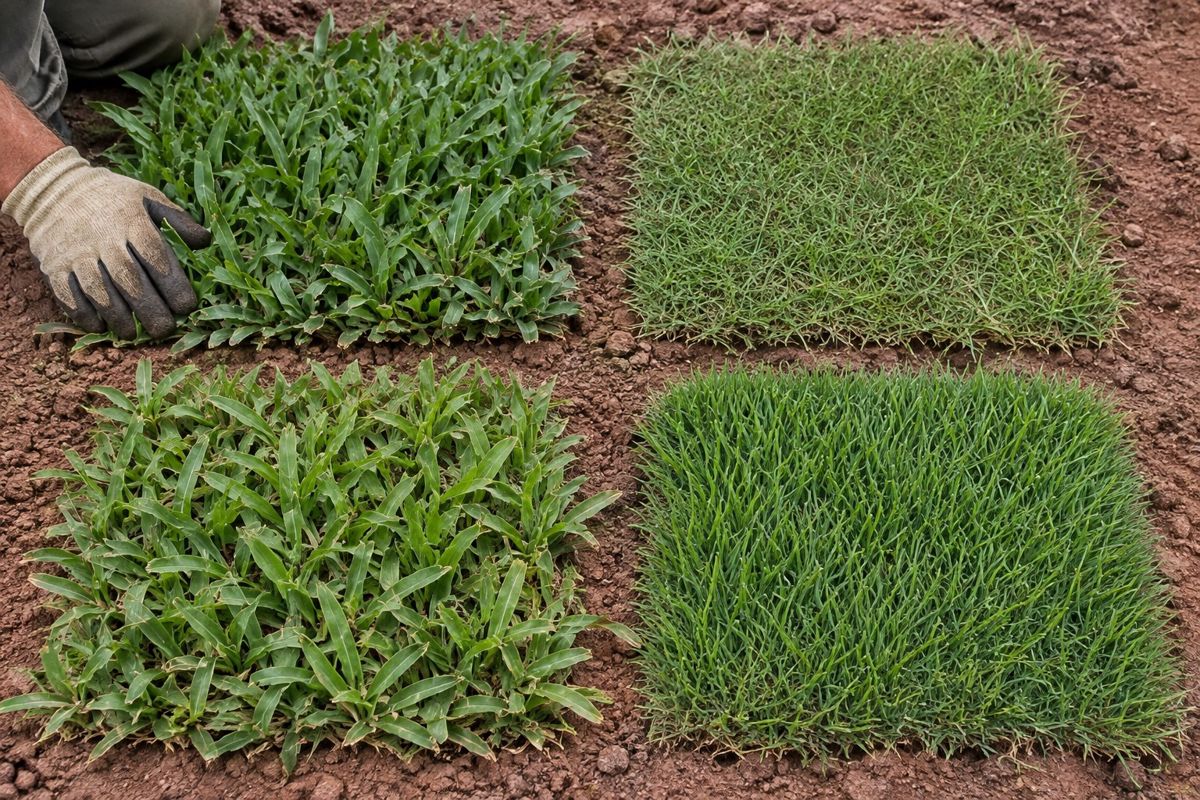
Sod gives you a finished lawn within a day or two. It covers bare soil right away, which helps stop mud and erosion during heavy rain. It costs more than seed, but it establishes faster and has fewer weeds. For St. Augustine and most zoysia, sod or plugs are the normal route, because these grasses are not usually grown from seed for home lawns.
Seed can work for Bermuda and centipede, and it is cheaper. The trade-off is time. Seedlings need steady moisture for weeks, and a hard downpour can wash them away on a slope. On a flat clay yard that floods, sod usually wins.
When should you lay sod in Lake Charles?
Late spring through early summer is the best window for warm-season sod. Soil and air are warm, so roots grow fast. Fall installs are possible but slower to root, and the grass can go dormant before it fills in. Winter is the riskiest time because a cold snap can stop growth and stress new turf.
Whatever the season, plan for the weather. Laying sod on saturated clay is a mistake. It smears the soil, seals the surface and leaves new roots with little air. Wait for the ground to dry enough to work, and avoid scheduling an install right before a forecast heavy rain.
How do you prepare wet clay soil for new sod?
Preparation decides whether the lawn lasts. Here is a sensible order of work.
- Fix drainage first. If water sits in a low spot, new sod will rot there. Regrade, add a swale or install a drain before laying turf.
- Clear the old surface. Remove dead turf, weeds, rocks and construction debris.
- Test the soil. The LSU AgCenter offers soil testing through parish extension offices. The results show pH and nutrient needs, which matters most for centipede.
- Loosen the top layer. Break up hard, compacted clay so roots can get in. Mix in suitable topsoil or compost where the ground is thin.
- Grade and smooth. Aim for a gentle slope away from the house, with no dips that hold water.
- Lay the sod tight. Stagger the seams, press out air gaps and roll the surface lightly.
Leave mature live oaks alone while you work. Do not pile fill against the trunk or bury the main roots to level a yard, because that can stress or kill the tree. If a big oak sits in the middle of your lawn, ask a qualified arborist before major changes. Where shade is thick, think about beds, mulch or shade-tolerant plants instead of fighting for grass.
How do you care for new sod through the first weeks?
New sod needs steady moisture until the roots knit into the ground. Keep it damp, not flooded, for the first couple of weeks, then slowly water less often but more deeply. After heavy rain, skip watering and check that water is not pooling.
- Keep foot traffic light for the first two weeks.
- Wait to mow until the sod is rooted. Lift a corner gently to check. If it resists, it is ready.
- Hold off on heavy fertilizer at first. Follow the soil test and the label.
- Watch for yellow patches, a spongy feel or fungus. Fix the cause early, since it spreads fast in humid weather.
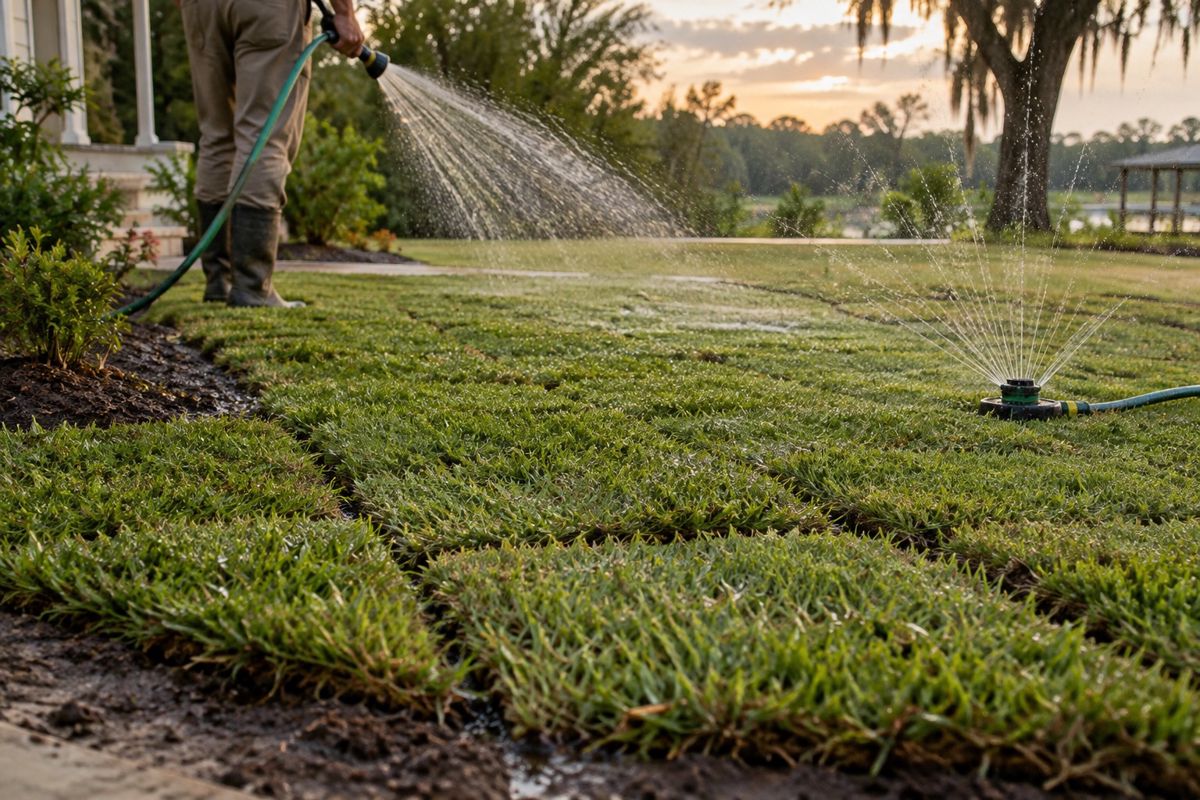
Over the long run, mow at the right height for your grass, keep blades sharp and water deeply but rarely. As a rough guide, lawns want about an inch of water a week in the growing season, counting rainfall. An automatic system with a rain sensor makes that easier. After a hurricane or flood, clear debris from the lawn quickly, check for standing water and give the grass a few weeks to recover before you decide to replace it.
Which grass should you choose, and who can help?
If you want a simple answer, pick St. Augustine for a mixed sun and shade yard, Bermuda for a sunny play lawn, centipede for low upkeep on suitable acidic soil, and zoysia for a dense, neat look. If your yard floods or has more shade than sun, fix those problems before you lay a single roll.
Our sod installation page explains how a lawn replacement works, from soil preparation to the first watering. If the water problem is bigger than a lawn can fix, have a look at our drainage solutions too.