
Skip to content
  • Free written quotes
  • Local crews
Lake Charles, LA (337) 555-0190
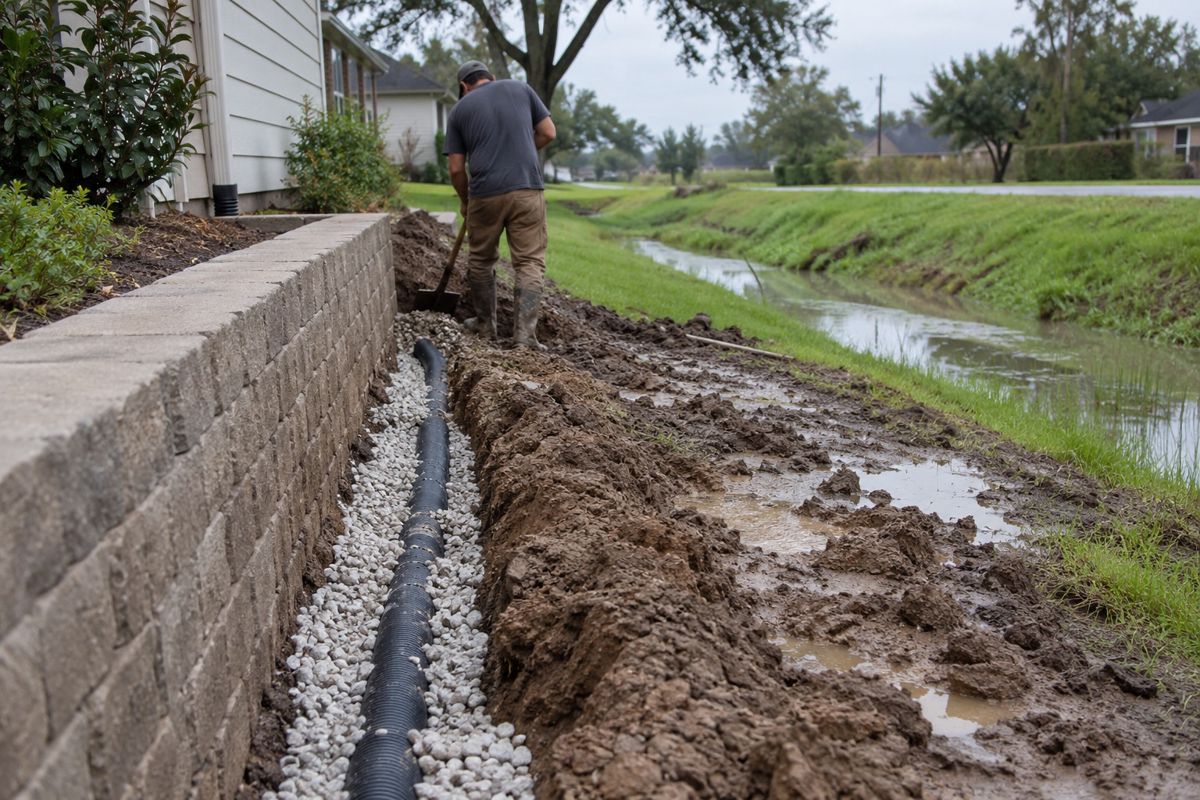
Low block retaining wall and gravel French drain trench in a flat wet yard

Retaining walls and drainage in Lake Charles

Retaining walls and drainage for Lake Charles yards

Walls that hold soil and drainage that moves water away from your home, built for flat lots, clay soil and heavy Gulf Coast rain.

  • French drains, swales and regrading for soggy ground
  • Retaining walls and raised beds built to drain
  • Bank and ditch erosion repairs

Why do Lake Charles yards need drainage work?

Southwest Louisiana gets a lot of rain, and much of the ground is flat clay that soaks it up slowly. When a lot has no real slope, water has nowhere to go. It sits in low spots, runs toward the house or collects along fences. Over time this can kill grass, rot plant roots, stain walls and make the yard unusable after a storm.

Drainage work fixes how water moves across and under your property. It might be as simple as extending a downspout, or it might involve regrading, a swale, a French drain or a catch basin tied to a pipe. The right choice depends on where the water comes from and where it can legally and safely go. Planning the whole yard? Our landscape design service folds drainage into the plan.

What drainage solutions work here?

These are the most common fixes for wet yards.

  • Downspout extensions and buried lines that carry roof water well away from the foundation.
  • Regrading and swales that reshape the ground so water flows to a street, ditch or safe outlet. Even a small slope helps.
  • French drains that use perforated pipe in a gravel trench to collect water from a soggy area.
  • Catch basins and surface drains for patios, driveways and low corners.
  • Dry creek beds and rain gardens that look good and hold water during a storm.

A drain is only useful if the water has somewhere to go. Before any major regrading, check local rules, and never send runoff onto a neighbor in a way that makes their problem worse. Louisiana law and parish or city practice can affect what is allowed, so it is wise to confirm before work starts.

When do you need a retaining wall in a flat area?

Lake Charles does not have hills, so walls here do different jobs than in sloped country. Common uses include raised planting beds that lift roots above wet soil, support for a bank beside a ditch or bayou, a step between a patio and a lower yard, and edging where fill has been added to raise a low spot.

Wall materials include segmental block, natural stone and treated timber. Block and stone last longer in a humid climate, while timber is cheaper but rots sooner. All walls need a compacted base, a way for water to escape behind them and good backfill. Without drainage behind it, a wall can bulge or tip as wet clay pushes against it.

Tall walls can need engineering and a permit. A wall near a property line or a ditch may also be regulated. Ask before you build.

Drainage and wall projects vary widely. These factors matter most.

  • Length and height of the wall, and the material you choose.
  • How much digging, hauling and fill the site needs.
  • The length of drain pipe, the number of catch basins and where the water will exit.
  • Whether existing fences, trees, slabs or utilities are in the way.
  • How easy it is for equipment to reach the area.
  • Whether the wall needs engineering or a permit.

Sometimes the cheapest fix is a surface solution such as a swale, and sometimes a buried drain is the only option. We explain the options and the trade-offs, then quote the one we recommend in writing. If you have a new lawn planned, fixing drainage first protects it, so look at our sod installation page too.

How long does it take, and when should you call?

A downspout extension or small swale can be done in a day. A French drain or a short block wall may take a few days, and longer walls take more. Wet weather delays digging, since saturated clay is hard to work and trenches can collapse.

On the day, expect utility marking, trenching or excavation, and a lot of soil movement. Stone, pipe and block go in, then the area is backfilled, graded and tidied. We usually suggest finishing with sod, mulch or plants to hold the soil.

Call when water stands for days after rain, when it runs toward your slab, when a ditch bank is washing out, or when a wall is leaning. Do not wait for the next big storm. See the Lake Charles landscaping home page for everything else we handle.

Request retaining walls

Tell us what you need and we call you back.

No obligation.

Step 1 of 3

What do you need?

Questions about landscaping in Lake Charles

Why does my yard stay wet for days after it rains?

The usual reasons are flat ground, clay soil that drains slowly, low spots, compacted soil from construction and roof water dumped close to the house. The fix depends on the cause. We look at the slope, the soil and the outlets before suggesting a drain, regrading or a combination of both.

What is a French drain and will it work for me?

A French drain is a trench holding gravel and a perforated pipe that collects water and carries it to a safe outlet. It works well for soggy patches and wet side yards when there is somewhere lower for the water to go. On very flat lots, we may suggest a swale or catch basin instead.

Do I need a permit for a retaining wall?

It depends on the height, the location and the local rules. Short garden walls often do not need one, while taller walls, walls near property lines or structures, and those that hold back a lot of soil may require engineering and a permit. Check with the city or parish office before you build.

Will draining my yard cause problems for my neighbors?

It should not, and it must not. Water has to leave your lot in a way that does not worsen a neighbor's flooding. We plan outlets toward streets, ditches or other approved paths. If your solution affects a shared boundary or drainage easement, talk to the local authority before work starts.

Can drainage work help during hurricane rain?

It can reduce ponding and move water away faster, but no yard drain can beat a major storm surge or street flooding. Clear debris from drains and ditches before storm season, keep downspouts connected and know your flood zone. Drainage helps on ordinary heavy rain days, which are far more common.

Free written quotes Local crews Reliable scheduling Tidy job sites

Ready when you are

Call now or request a quote online.

(337) 555-0190

How it works

  1. Tell us about the yard

    Size, goals and any photos.

  2. Site visit and quote

    We walk the property and put the price in writing.

  3. We do the work

    Scheduled crew, cleanup included.