
Skip to content
  • Free written quotes
  • Local crews
Lake Charles, LA (337) 555-0190
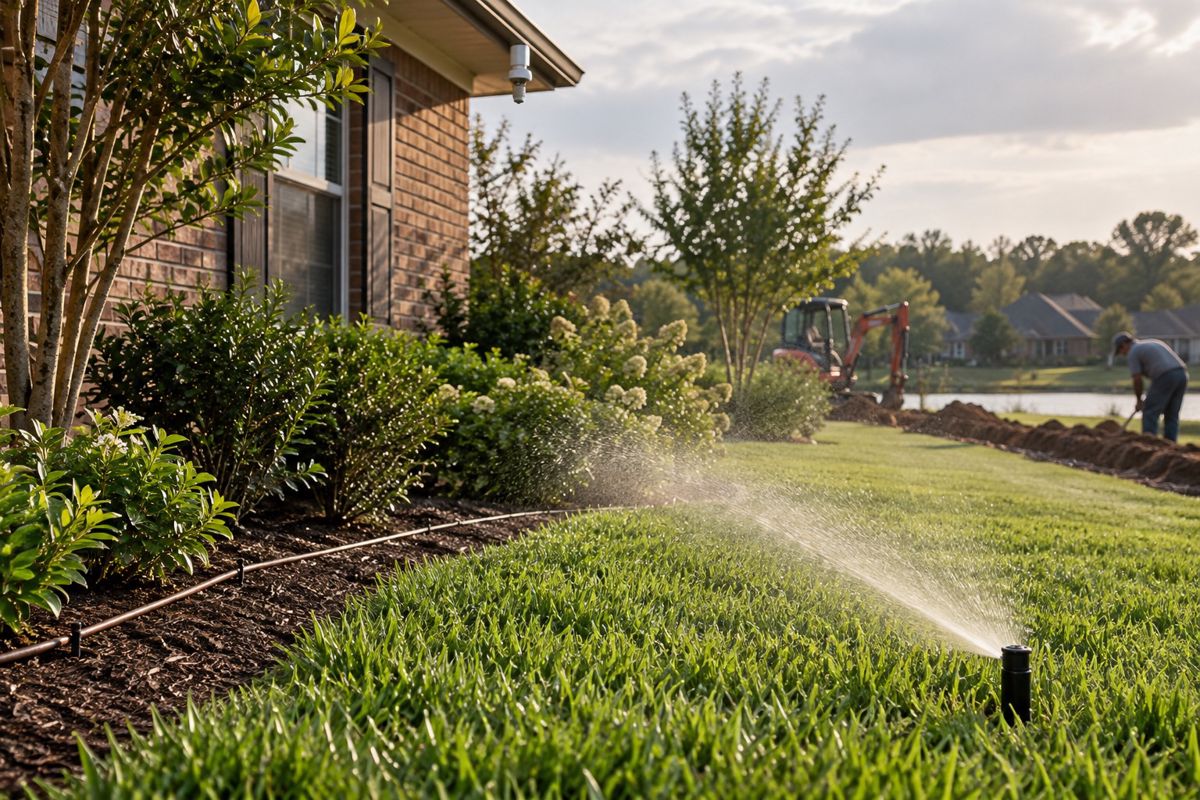
Sprinkler head watering a green lawn beside a mulched shrub bed

Irrigation in Lake Charles

Sprinkler system installation in Lake Charles, LA

Zoned sprinklers and drip lines that keep lawns and beds healthy through dry spells without overwatering in a wet climate.

  • Zones planned around sun, shade and plant type
  • Rain sensors and drip lines for beds
  • Installed to suit your yard and water supply

Do Lake Charles lawns really need sprinklers?

It sounds odd in a place with so much rain, but yes, many do. Rain here comes in bursts, and a hot dry stretch in summer can dry out the top inch of soil quickly. Clay holds water at depth, but new sod, young plants and shallow-rooted grass still suffer. A sprinkler system gives you control over when and how much water goes on, so you are not dragging hoses around in July.

A well-planned system also helps you avoid waste. The aim is steady, measured watering when the yard needs it, and nothing when it has just rained. Overwatering is more common than underwatering in this area, and it invites fungus and soggy roots. If you are planting a new lawn, see our sod installation service, because irrigation works best when it goes in first.

What does sprinkler installation involve?

A typical installation includes these steps.

  1. Site walk and design. We map the lawn and beds, check sun and shade, and look at your water supply and pressure.
  2. Zones. The yard is divided into zones so each gets the right amount of water. Lawn, beds, sunny areas and shady areas have different needs.
  3. Trenching and piping. Lines are buried after utilities are located. Heads, valves and a controller are connected.
  4. Backflow prevention. A backflow device protects your drinking water from contamination.
  5. Testing and adjustment. Every zone is run and adjusted for coverage, overlap and pressure.
  6. Walkthrough. We show you how to set the controller and what to do before a storm or freeze.

In Louisiana, irrigation installation is regulated at the state level, so ask any installer which license they hold and ask to see it.

Which sprinkler heads and add-ons make sense here?

Different parts of a yard need different tools.

  • Spray and rotor heads for lawn areas, matched to the size of each zone.
  • Drip lines for shrub and flower beds. They put water at the roots and waste less.
  • Rain sensors that pause the system after a storm. In this climate, they are well worth adding.
  • Smart controllers that adjust schedules by weather and season.
  • Pop-up heads with proper height so they clear the grass, whether St. Augustine, Bermuda or centipede.

Live oak roots and clay soil add some challenges. Trenching close to a big oak can damage roots, so we route lines around them when we can. Heavy clay also drains slowly, so zones are run in shorter cycles to prevent runoff. For the planting side, see our landscape design page.

Irrigation cost depends on the design, not just the lot size. The main factors include:

  • Lawn and bed area to cover, and the number of zones needed.
  • Water source, pressure and meter or well size.
  • Obstacles such as driveways, walks, slabs and tree roots that need boring or routing.
  • The type of heads, valves, controller and sensors chosen.
  • Whether drip irrigation is added for beds.
  • Soil conditions and how easily the trench can be dug.

Adding irrigation after sod or hardscape is built can cost more, because lines have to be bored under finished surfaces. That is why we suggest planning it early. Our hardscaping team can place sleeves under a future patio so you do not have to dig it up later. The written quote lists each part of the system.

How long does it take, and when should you call?

Most home systems take a few days from trenching to testing. Larger yards or tricky layouts take longer. Heavy rain stops trenching, since mud and collapsing trench walls are a problem.

On the day, expect utility marking, trenching and a little mess that gets cleaned up and re-graded at the end. The controller is set at the end, and you get a basic watering schedule for each season.

Call when you are laying new sod, when you keep losing plants in dry spells, when your hoses are in constant use, or when an old system has broken heads and uneven coverage. Before hurricane or freeze seasons, learn how to switch the system off. For the full list of services, visit the Lake Charles landscaping home page.

Request irrigation systems

Tell us what you need and we call you back.

No obligation.

Step 1 of 3

What do you need?

Questions about landscaping in Lake Charles

How much should I water a lawn in Lake Charles?

As a rough guide, lawns need about an inch of water a week in the growing season, counting rain. Water deeply but not often, and skip a cycle when it has rained. St. Augustine usually needs more than Bermuda or centipede. A rain sensor or smart controller helps you avoid overwatering after storms.

Is a rain sensor worth it?

Yes. Storms are frequent here, and a system running during or after a downpour wastes water and promotes fungus. A rain sensor pauses the system when it has rained. It is a small add-on that pays for itself, and some smart controllers do the same job using local weather data.

Do I need a license or permit to install a sprinkler system?

In Louisiana, irrigation work is regulated at the state level, and the installer should hold the right license. You should ask to see it. Local rules can also cover backflow devices, connections to city water and well use. Check with the city or parish if you are unsure, and ask us what applies.

Can sprinklers be shut down before a hurricane or freeze?

Yes, and you should. Turn the controller off before a storm so it does not run in the rain. Before a hard freeze, shut off the water supply to the system and protect exposed backflow devices and pipes above ground. We show you how during the walkthrough, and we can explain the steps if you forget.

Will trenching damage my lawn or live oak roots?

The lawn along the trench lines will be disturbed, and it recovers after re-grading and a few weeks of care. Near live oaks, we route lines away from the trunk and main roots where possible, since root damage can hurt the tree. If a line must pass near a big oak, talk to an arborist first.

What you can expect

  1. Free written quotes

  2. Local crews

  3. Reliable scheduling

  4. Tidy job sites

Ready when you are

Call now or request a quote online.

(337) 555-0190

How it works

  1. Tell us about the yard

    Size, goals and any photos.

  2. Site visit and quote

    We walk the property and put the price in writing.

  3. We do the work

    Scheduled crew, cleanup included.